AI testing tools compared: Find the right fit for your team
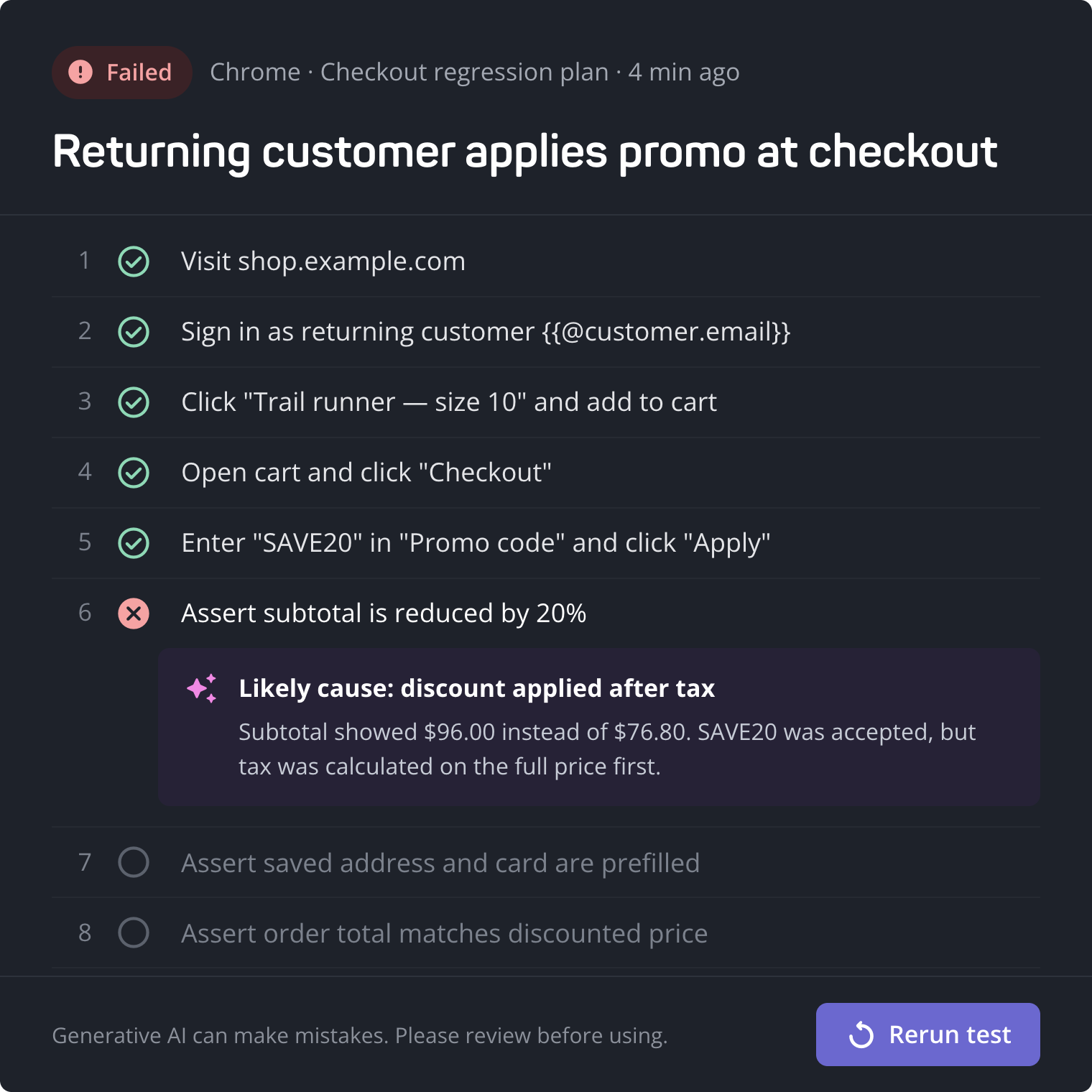
AI testing tools use AI to create, run, maintain or analyze software tests. They fall into five types, from open-source frameworks your engineers script by hand to platforms that verify every release on their own. Here's how they compare, and how to pick the one that fits how your team builds and ships.
AI_Test_Tools_-_Hero_2

What are AI testing tools?

AI testing tools apply AI to some or all of the testing lifecycle: writing tests, finding elements on the page, deciding whether a result is right, fixing tests when the app changes, and explaining why a test failed. The difference between tools is how much of that work the AI does, and who checks the AI's work.

That second point is an ever-growing source of problems. Coding agents now write an increasingly large share of the code teams ship. The problem is that a testing tool that gets its instructions from the same agent that wrote the code may tell you a feature works when it doesn't.
The four types of testing tools at a glance

  Scripted frameworks Low-code and record-and-playback tools AI-native test automation tools Testing harness
Examples Selenium, Playwright, Cypress Katalon and similar testRigor, Testsigma, Momentic mabl
Who creates tests Engineers, in code Testers, by recording or with visual steps Testers or developers, in plain language Anyone, from plain language, Jira tickets or user stories
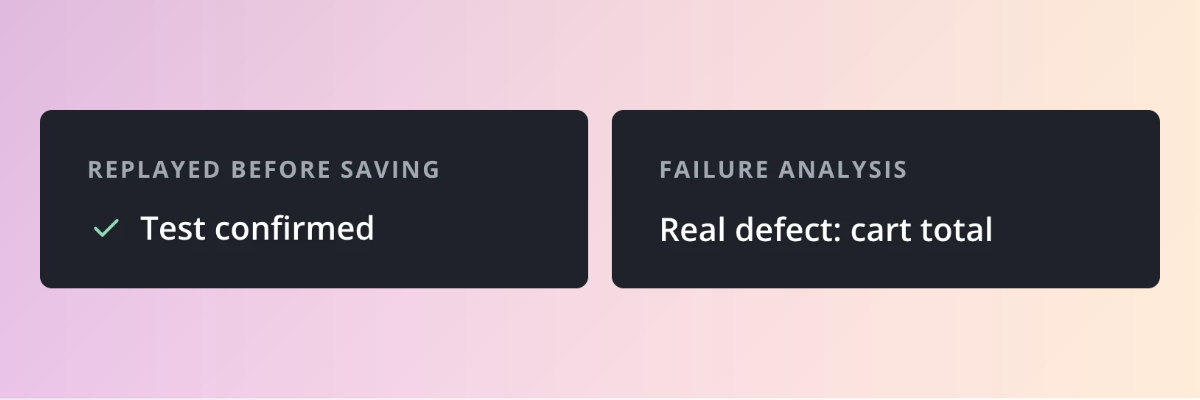
Is a new test checked before it's trusted? Only if someone reviews it Usually by the person who recorded it Varies by tool Replayed to confirm it passes before it's saved
Independence from the code author Depends on team process Separate from the code Separate from the code Built in; designed as an independent check
When the app changes Someone fixes the code Locators can break; some tools self-heal Most self-heal Detects the change and proposes or applies a fix; real defects still fail
When a test fails Someone reads the logs Logs and screenshots AI summaries in many tools Automatic root-cause analysis on every failure
Audit trail What your CI/CD system keeps Run history in the tool Run history in the tool A durable record of every run: results, logs, screenshots and who triggered it
Best fit Teams with strong engineering capacity and stable apps QA teams moving off manual testing Teams that want faster authoring Business-critical apps where every release needs a verdict you can stand behind

The four types, up close

AITT - Scripted frameworks header

Type 1

Scripted frameworks

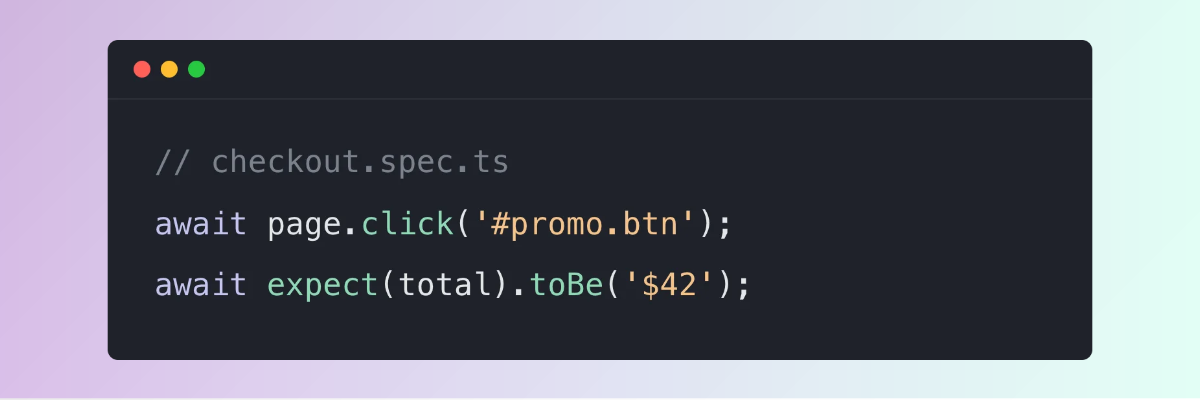
Selenium, Playwright and Cypress are open-source frameworks engineers use to write tests in code. They're flexible, free to start, and well documented. Many of these tools now add AI help, such as Playwright's agent tooling.

Where they fit: Teams with engineers who have time to write and maintain test code, and apps that change slowly.

Where they struggle: Every UI change can break tests, someone has to read logs when they fail, and only engineers can contribute.

Compare: mabl vs. Playwright · mabl vs. Selenium
AITT - Low code header

type 2

Low-Code and Record-and-Playback Tools

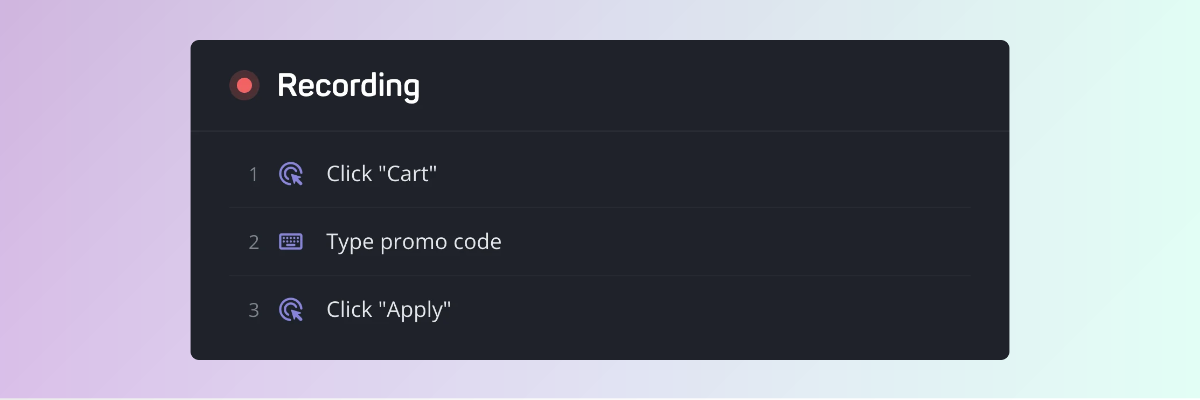
Tools like Katalon let testers build tests by recording clicks or assembling visual steps, with scripting available for complex cases. Many have added AI features for test generation and self-healing.

Where they fit: QA teams moving from manual testing to automation, without deep coding skills.

Where they struggle: Recorded tests can be brittle, suites grow hard to maintain at scale, and many weren't designed around coding agents.


AITT - AI-native header

Type 3

AI-native test automation tools

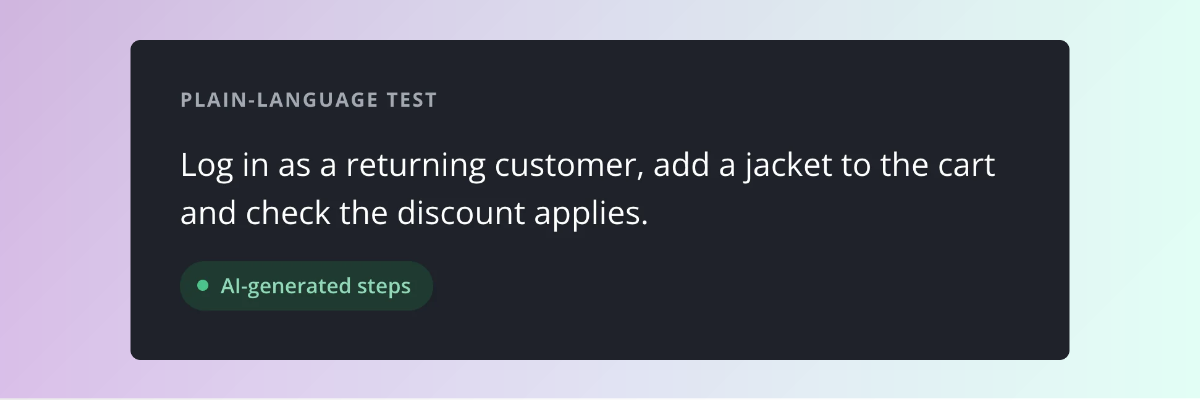
A newer group of tools, including testRigor, Testsigma and Momentic, let you write tests in plain language and rely on AI to run and repair them.

Where they fit: teams that want faster test authoring and less maintenance than scripted or recorded tests.

Where to look closely: how each tool checks its own AI-generated tests, what it remembers about your app between runs, how it explains failures and what evidence it keeps for audits.
AITT - Testing harness header

type 4

Testing Harness

A testing harness is a system that works in parallel with coding agents, but is built to author, run, and maintain end-to-end tests under controlled conditions, ultimately delivering a verdict on whether your code is safe to ship.

mabl is the independent verification layer for agentic development. Drawing on the deep context it gathers from your app, it builds tests from plain language or Jira tickets and replays them before saving, analyzes every failure, and keeps tests current as your app changes. It works from your IDE through the mabl MCP server, from Jira, and from your CI/CD pipeline.

Where it fits: Business-critical apps, teams adopting coding agents, and companies that need an audit trail for every release.

See it: AI test automation with mabl · How mabl verifies AI-generated code

How to choose an AI testing tool

Ask these questions before you trust any tool's pass or fail.

Is it independent of the agent that wrote the code?

Does it confirm a new test actually passes before adding it to the suite?

What does it know about your application, and does that carry over from run to run?

When the UI changes, does it fix the test without hiding a real defect?

Can you see why it made each decision?

Does it work where your team works: your pipeline, your IDE and Jira?

Who on your team can read and change the tests?

Will its records hold up if an auditor asks what was tested before a release?

Does it work efficiently at scale?

Frequently Asked Questions

+

What are AI testing tools?

AI testing tools use AI to create, run, maintain or analyze software tests. They range from frameworks with AI helpers to platforms that build tests from plain language, fix them when the app changes and explain every failure.

+

What is the best AI testing tool?

It depends on your team. Engineering-heavy teams with stable apps often start with Playwright. Teams shipping business-critical apps with coding agents need an independent testing harness that verifies every release and keeps an audit trail.

+

Can AI write my tests?

Yes. Coding agents and AI testing tools can both generate tests from a description. The question is who checks them: a test written by the agent that wrote the feature tends to share its blind spots.

+

What's the difference between AI-assisted and agentic testing tools?

AI-assisted tools speed up work people still do, like suggesting test steps. Agentic tools do the work themselves, from building tests to analyzing failures, and check in with your team where judgment matters.

+

Do AI testing tools replace QA engineers?

No. They take over repetitive work like scripting, triage and test repair, so QA engineers can focus on test strategy, risk and release decisions.

+

Are open-source AI testing tools enough?

For many teams, frameworks like Playwright are a good start. As coverage grows, the cost shifts to maintaining tests, triaging failures and building the evidence trail, which is where a platform pays off.

See how an independent verification harness works

Get one verdict on every release, with the evidence to back it up.